Firearms Rights and Safety Bill
At a Glance
- Requires secure storage of all firearms when not in the owner's immediate control
- Risk protection orders with full hearing within 48 hours and right to counsel
- Background checks completed in 60 seconds by an independent nonprofit
- Codifies serial number requirements for ghost guns and weapon parts kits
- Removes suppressors from the NFA; regulates them as standard firearms
The right to keep and bear arms is woven into America’s founding and its identity. It is also a right that, like every right enshrined in the Constitution, carries responsibilities and is not without limits. For decades, the firearms debate has been trapped in a false choice: expand rights or improve safety. The result has been partisan gridlock in which neither side achieves its goals and Americans continue to die from preventable gun violence while law-abiding owners face a patchwork of inconsistent regulations. Meaningful legislation must do both—strengthen the rights of responsible gun owners and reduce the circumstances under which firearms cause harm.
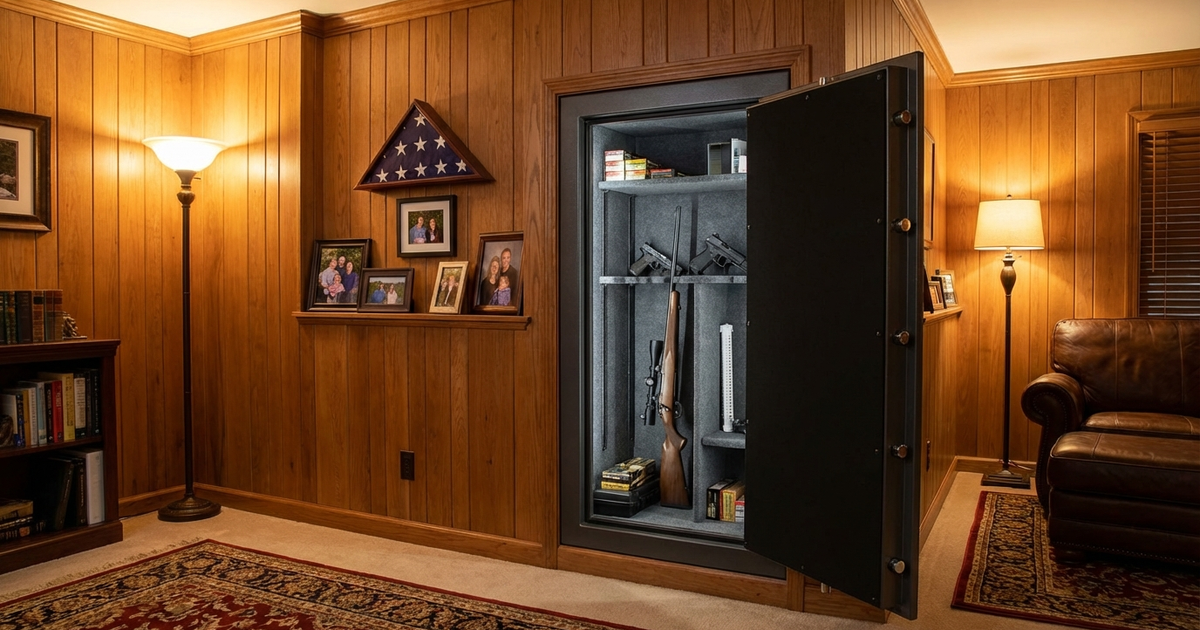
This bill starts from the principle that unsecured firearms are the common thread in most preventable gun deaths—accidents involving children, thefts that put weapons in criminal hands, and access by individuals in crisis. All firearms must be stored securely when not in the immediate control of the lawful owner. Any person whose negligence enables an unauthorized individual to access a firearm and cause harm will face felony charges. At the same time, the bill protects due process for gun owners by establishing risk protection orders with robust safeguards: a full adversarial hearing within 48 hours, the right to counsel, and mandatory return of all seized firearms within 48 hours of a favorable ruling—with civil penalties for government agencies that fail to comply.
The background check system will be modernized and transferred to an independent nonprofit organization, removing it from direct government control. Checks will be completed within 60 seconds, eliminating the delays that burden lawful purchasers. Transaction records will be maintained solely for verification purposes, purged after 180 days, and accessible to no government agency without a narrowly scoped subpoena tied to a specific criminal investigation. Firearm suppressors—which function as hearing protection rather than tools of concealment—will be removed from the National Firearms Act and regulated as standard serialized firearms.
To close a growing traceability gap, the bill codifies into statute the requirement that all firearm frames, receivers, and weapon parts kits bear serial numbers and be subject to background checks. Law enforcement agencies recovered over 92,000 unserialized privately made firearms at crime scenes between 2017 and 2023[1], with nearly 1,700 associated with homicides[2]. While the Supreme Court upheld ATF’s serialization rule in Bondi v. VanDerStok[3], that protection exists only as an administrative regulation that a future administration could weaken. Codifying it into law makes the requirement permanent.
Finally, the bill establishes dedicated funding for firearm safety education—including training on secure storage and recognition of individuals at risk of committing violence—and for mental health treatment programs serving at-risk individuals, veterans, and active-duty service members. Prevention, not just enforcement, is essential to reducing gun violence while respecting the rights that Americans hold dear.
Problems the Bill Aims to Solve
Partisan Gridlock Prevents Meaningful Reform. Gun legislation typically divides along party lines, with proposals seen as either expanding rights or restricting them. This stalemate has prevented passage of measures that could improve public safety while respecting constitutional rights.
Unsecured Firearms Enable Unauthorized Access. Firearms that are not properly stored contribute to accidental shootings, youth access, theft, and misuse by prohibited individuals. Current laws do not consistently require secure storage or hold owners accountable when negligence leads to harm.
Individuals in Crisis Retain Access to Firearms. People experiencing mental health emergencies or demonstrating threatening behavior may still have access to firearms, creating risk to themselves and others. Existing intervention mechanisms are inconsistent across jurisdictions.
Risk of Due Process Violations in Firearm Removal. Red flag laws in some states lack adequate protections for the accused, creating potential for abuse or prolonged deprivation of property without proper judicial review.
Background Check System Causes Delays and Uncertainty. The current system can result in lengthy waits that burden lawful purchasers. System inefficiencies and incomplete records undermine both rights and safety.
Concerns About Government Surveillance of Gun Owners. Many Americans oppose a centralized government registry of firearm transactions, viewing it as a potential tool for future confiscation or government overreach.
Outdated Regulation of Firearm Silencers. Suppressors, which reduce hearing damage for shooters, remain subject to extensive NFA restrictions despite functioning as safety equipment rather than enhancing lethality.
Unserialized Firearms Undermine Law Enforcement. Between 2017 and 2023, law enforcement agencies recovered over 92,000 privately made firearms—commonly known as ghost guns—at crime scenes, with recoveries increasing approximately 1,600 percent over that period[1]. Nearly 1,700 were associated with homicides[2]. These weapons are untraceable because they lack serial numbers, rendering traditional investigative tools useless. While the Bureau of Alcohol, Tobacco, Firearms and Explosives issued a rule in 2022 requiring serialization of firearm parts kits, and the Supreme Court upheld that rule in Bondi v. VanDerStok[3] in March 2025, the protection exists only as an administrative regulation that a future administration could weaken or rescind. Codifying the serialization requirement into statute would make this protection permanent.
Insufficient Investment in Prevention. Resources for firearm safety education, early intervention with at-risk individuals, and mental health treatment remain underfunded, leaving prevention efforts fragmented and inadequate.
Firearms Rights and Safety Act
120th Congress, 2nd Session
Be it enacted by the Senate and House of Representatives of the United States of America in Congress assembled,
Sec. 1. SHORT TITLE.
This Act may be cited as the "Firearms Rights and Safety Act."
Sec. 2. DEFINITIONS.
For purposes of this Act—
- (1) FIREARM.—The term "firearm" has the meaning given that term in section 921(a)(3) of title 18, United States Code.
- (2) SECURE STORAGE.—The term "secure storage" means storage in a locked container, gun safe, vault, or secured room reasonably designed to prevent unauthorized access, or the use of a tamper-resistant locking device that renders the firearm inoperable.
- (3) IMMEDIATE USE.—The term "immediate use" means the firearm is being carried on the person of the lawful owner or is within such close proximity that the owner maintains effective control at all times.
- (4) UNAUTHORIZED PERSON.—The term "unauthorized person" means any individual who is under eighteen years of age (unless supervised), is prohibited from possessing a firearm under Federal or State law, or has not received express authorization of the lawful owner.
- (5) RISK PROTECTION ORDER.—The term "risk protection order" means a court order temporarily prohibiting an individual from purchasing or possessing firearms based upon a judicial finding that the individual poses an imminent danger to self or others.
- (6) DESIGNATED NONPROFIT ORGANIZATION.—The term "designated nonprofit organization" means the independent, nongovernmental entity designated by the Attorney General under Section 6 to administer the National Instant Background Check System.
- (7) PRIVATELY MADE FIREARM.—The term "privately made firearm" means a firearm, including a frame or receiver, that is not marked with a serial number issued by a licensed manufacturer or importer, whether manufactured, assembled, or otherwise produced by a person who is not a licensed manufacturer.
- (8) WEAPON PARTS KIT.—The term "weapon parts kit" means any combination of parts designed and intended to be used to assemble a functional firearm, including any kit, set, or collection of parts from which a firearm may be readily assembled if those parts are in the possession or under the control of the same person.
- (9) FRAME OR RECEIVER.—The term "frame or receiver" means a part of a firearm that, when the complete weapon is assembled, is visible from the exterior and provides housing or a structure for one or more fire control components, even if the part in question may also house or provide a structure for additional components, including any partially complete, disassembled, or nonfunctional frame or receiver that has reached a stage in manufacture where it may readily be completed, assembled, or converted to function as a frame or receiver.
Sec. 3. SECURE STORAGE REQUIREMENTS.
- (1) REQUIREMENT.—Any person who owns or possesses a firearm shall, when such firearm is not in the immediate use of the lawful owner, store the firearm in secure storage.
- (2) CRIMINAL LIABILITY.—Any person who fails to store a firearm in compliance with paragraph (1) and, as a proximate result, an unauthorized person obtains access and causes bodily injury or death, shall be guilty of a felony and subject to imprisonment for not more than five years, a fine of not more than one hundred fifty thousand dollars, or both.
- (3) LESSER OFFENSE.—Failure to store resulting in unauthorized access without bodily injury or death shall be a misdemeanor subject to a fine of not more than ten thousand dollars.
- (4) AFFIRMATIVE DEFENSE.—It shall be an affirmative defense that the firearm was obtained through unlawful entry or that the owner reported the firearm stolen within twenty-four hours.
- (5) TAX CREDIT.—There shall be allowed a credit against Federal income tax equal to the lesser of the cost of a qualifying firearm storage device or five hundred dollars per taxable year.
Sec. 4. RISK PROTECTION ORDERS WITH DUE PROCESS SAFEGUARDS.
- (1) A court may issue a risk protection order upon a finding by clear and convincing evidence that the respondent poses an imminent danger of causing bodily harm through the use of a firearm.
- (2) Petitions may be filed only by a law enforcement officer or agency, or a family or household member of the respondent.
- (3) A temporary ex parte order shall be effective for not more than fourteen days, and a full adversarial hearing shall be held within forty-eight hours after service.
- (4) At the hearing, the respondent shall have the right to counsel (including appointed counsel if indigent), to present evidence, to cross-examine witnesses, and to a written statement of findings.
- (5) An order issued after a full hearing shall be effective for not more than one hundred eighty days and may be renewed only upon a new petition and hearing.
- (6) Upon expiration, dissolution, or favorable adjudication, all seized firearms shall be returned within forty-eight hours. Failure to return firearms shall result in a civil penalty of one thousand dollars per day per firearm.
- (7) Any person who files a petition knowing the allegations to be false shall be guilty of a misdemeanor subject to imprisonment for not more than one year, a fine of not more than twenty-five thousand dollars, or both.
Sec. 5. PROTECTION OF SECOND AMENDMENT RIGHTS.
Nothing in this Act shall be construed to create a national firearms registry, authorize confiscation of firearms from any person not subject to a lawful court order, impose any burden on the right to keep and bear arms beyond the specific provisions herein, or preempt any State law that provides greater protection for firearms rights.
Sec. 6. SERIALIZATION OF PRIVATELY MADE FIREARMS AND WEAPON PARTS KITS.
- (1) SERIALIZATION REQUIREMENT.—Any person who manufactures, assembles, or otherwise produces a firearm, including a frame or receiver, shall mark the firearm with a serial number issued by or obtained from a licensed manufacturer or the Attorney General before the firearm is sold, offered for sale, transferred, or otherwise disposed of.
- (2) WEAPON PARTS KITS.—Any person engaged in the business of selling, offering for sale, or distributing weapon parts kits shall—
- (a) mark or cause to be marked each frame or receiver included in the kit with a unique serial number before sale or distribution;
- (b) treat each sale or transfer of a weapon parts kit as a sale or transfer of a firearm for purposes of background check requirements under section 922(t) of title 18, United States Code; and
- (c) maintain records of such transactions as required of licensed dealers under section 923 of title 18, United States Code.
- (3) EXISTING PRIVATELY MADE FIREARMS.—Any person who possesses a privately made firearm that is not marked with a serial number as of the date of enactment shall, not later than one year after enactment, have the firearm serialized by a licensed manufacturer, licensed importer, or licensed dealer, or by the Attorney General through a process established by regulation.
- (4) PROHIBITION ON UNSERIALIZED TRANSFER.—No person may sell, offer for sale, transfer, or otherwise dispose of a privately made firearm or frame or receiver that does not bear a serial number.
- (5) PENALTY.—Any person who violates this section shall be subject to a civil penalty of not more than ten thousand dollars per firearm for a first violation and not more than twenty-five thousand dollars per firearm for a subsequent violation. A person who knowingly and willfully violates this section shall be subject to criminal penalties under section 924 of title 18, United States Code.
- (6) EXCEPTION FOR PERSONAL USE.—Nothing in this section shall prohibit a person who is not otherwise prohibited from possessing a firearm from manufacturing a firearm for personal use, provided the firearm is serialized in accordance with paragraph (1) before manufacture is complete.
Sec. 7. INDEPENDENT INSTANT BACKGROUND CHECK SYSTEM.
- (1) Not later than two years after enactment, administration of the National Instant Criminal Background Check System shall be transferred from the FBI to a designated nonprofit organization selected by the Attorney General.
- (2) The organization shall complete each background check within sixty seconds. If a determination cannot be made within sixty seconds, a provisional approval shall be issued with final determination within twenty-four hours.
- (3) TRANSACTION RECORDS.—The organization shall maintain a transaction registry solely for verification purposes. No government agency shall have access except pursuant to a subpoena issued upon a showing of probable cause related to a specific criminal investigation. Records shall be purged after one hundred eighty days.
- (4) OVERSIGHT BOARD.—There is established a Background Check System Oversight Board consisting of—
- (a) two members appointed by the Attorney General with experience in law enforcement;
- (b) two members appointed by the Speaker of the House and the President pro tempore of the Senate with experience in civil liberties or privacy advocacy;
- (c) one member appointed by the Attorney General who is a representative of licensed firearms dealers; and
- (d) one member appointed by the Comptroller General with experience in information technology security or auditing.
The Board shall conduct quarterly reviews of the organization's operations, accuracy rates, processing times, data security, and compliance with privacy protections, and shall publish a public report of its findings within thirty days of each review.
- (5) The GAO shall conduct an annual audit of the organization to ensure compliance and protection of personally identifiable information. The audit shall include an assessment of system accuracy, denial rates, appeal outcomes, and data security.
- (6) PERFORMANCE STANDARDS.—The designated nonprofit organization shall maintain a system availability rate of not less than ninety-nine and five-tenths percent, a background check accuracy rate of not less than ninety-nine percent as measured by successful appeals, and shall publish monthly performance metrics on a publicly accessible website.
Sec. 8. DEREGULATION OF SILENCERS.
- (1) Section 5845(a) of the Internal Revenue Code of 1986 is amended by removing silencers from the definition of "firearm" for purposes of the National Firearms Act.
- (2) Silencers shall be treated as standard firearms subject to serialization and background check requirements.
- (3) Any person who paid the NFA tax on a silencer within two years before enactment shall be entitled to a refund.
Sec. 9. FIREARM SAFETY EDUCATION AND VIOLENCE INTERVENTION FUND.
- (1) There is established within the Treasury the Firearm Safety Education and Violence Intervention Fund, administered by the Attorney General.
- (2) Grants shall be provided for voluntary firearm safety education programs, community-based violence intervention programs, mental health treatment for at-risk individuals, and school-based threat assessment programs.
- (3) There is authorized to be appropriated three hundred million dollars annually for fiscal years 2026 through 2035.
- (4) No funds may be used to create or maintain any registry of firearms or firearms owners.
Sec. 10. MENTAL HEALTH AND AT-RISK INDIVIDUAL TREATMENT.
- (1) The Secretary of Health and Human Services shall establish a grant program to expand mental health treatment access for individuals at elevated risk of firearms violence, including persons subject to risk protection order petitions, veterans, and active-duty service members.
- (2) Participation shall be voluntary, and no record of participation shall be used to disqualify any person from exercising firearms rights unless otherwise required by Federal law.
- (3) There is authorized to be appropriated two hundred million dollars annually for fiscal years 2026 through 2035.
Sec. 11. EFFECTIVE DATE.
- (1) This Act shall take effect one hundred eighty days after enactment, except as otherwise specified.
- (2) Section 6 shall take effect one year after enactment.
- (3) Section 7 shall take effect two years after enactment.
- (4) Section 8 shall take effect ninety days after enactment.
Sources
- Bureau of Alcohol, Tobacco, Firearms and Explosives, "Privately Made Firearms." https://www.atf.gov/firearms/privately-made-firearms
- Bureau of Alcohol, Tobacco, Firearms and Explosives, "National Firearms Commerce and Trafficking Assessment: Crime Guns - Volume Two," January 2025. https://www.atf.gov/firearms/national-firearms-commerce-and-trafficking-assessment-nfcta-crime-guns-volume-two
- Bondi v. VanDerStok, 602 U.S. ___ (2025). https://www.supremecourt.gov/opinions/24pdf/23-852_o7jp.pdf